

It’s one of the most important questions in marketing: how to generate leads. Some companies make it look easy, while others never quite figure it out. And when it isn’t working, everyone has a different theory about why.
That’s because lead generation isn’t one thing. It’s 35 things. Fail at just one or two and you’ll feel it somewhere downstream.
Today we’ll take a big step back and look at how all of those 35 things fit together on one big lead generation process diagram. Here’s everything required to build a lead generation machine.
A quick note: Our focus here is lead generation through organic channels. That means no outreach, no ads, no paid channels of any kind. Those may work, but here our focus is on inbound leads, content marketing and organic lead generation through earned and owned content.
It’s a planning tool and checklist. Print it. Hang it on the fridge.

Strategy and Branding
It starts with clarity and alignment: why we’re in business, who we sell to, why they value it and who is in our competitive set. Your brand is your prospects’ perception of your position in the market.
1. Mission, vision and values
Why does the company exist? What do you actually stand for? These aren’t just questions for a leadership retreat. They affect everything that comes later: what you write, who you hire, which clients you turn down. Skip this and you’re building on sand.
2. Research: our buyer and our competition
Know your niche: who are your potential customers, what do they need, and who else is trying to reach them? Content strategy is the bait we’ll use, but audience strategy is the pond we fish in.
The B2B lead gen marketer doesn’t need demographic data. You need personas. Today that often means AI-generated personas, validated with the sales team and call transcripts. They include the buyer journey, the buying committee, the top questions, fears and hopes. Accurate, documented personas make everything more targeted forever after.
3. Positioning
Now we get specific. What’s your unique point of difference? Why do they care? What wins the sales call?
Positioning is the answer to a simple question: why you and not them? It’s the exact intersection of what your buyer needs, what you do best and what your competitors don’t do quite as well.
Weak positioning hurts the brand and also lead quality. If you don’t stand apart, you attract sales leads who are shopping on price instead of prospects who really need what you’re really good at.
Your positioning also shapes what AI says about you. When a buyer asks for a recommendation, the model looks for the brand that best matches their needs …and vague, watered-down brands don’t get matched.
4. Messaging
How do you describe the value you deliver? What evidence backs up your claims? Align the message with the position and the values, then find a voice that’s clear and concise.
This is also where AI visibility and recommendations begin. The LLMs learn what your business does and who you sell to from the words you use to describe it.
5. Visual standards
Colors, type, imagery, tone. Carry them through the website, the decks, the social media posts and every piece of content. This visual consistency is a trust signal and trust is a conversion factor.
The Website
The website is two things at once: the platform for publishing and the machine for capturing leads. It has to attract qualified prospects, build trust and give them a low-friction path toward conversion. These are two of the 10 critical web design requirements.
6. Keyword research and fanout queries
People are searching for you right now, as you read this sentence. They’re querying search engines and prompting AI chatbots. We need to know the phrases they search for (traditional search engine optimization) and the questions they ask (AI search optimization), then align pages with those phrases and questions.
When AI searches before recommending, it doesn’t just use a single query. It breaks the question into several related searches then summarizes the results. These are called fan-out queries.
Do this before the sitemap.
7. Sitemap
Your sitemap shapes two separate things:
- The UX: how visitors navigate
- The URLs: what gets surfaced in search results and AI responses
A well planned website has many possible entry points, so the homepage is one of many landing pages. Aligning with keyphrases and fan-out queries means making a page for every service, location, topic and team member.
Once they land, they see the navigation labels and menu structure. So build the sitemap for both audiences: humans and bots are reading the same labels.
8. Wireframes: UX, conversion paths, flexibility
Wireframes are the black-and-white layouts for each page template. Here’s where you plan the user experience and conversion paths on various devices. They also affect SEO and AI search (elements for text) and determine how easy it is to update pages later (page block library).
9. Moodboards
Wireframes are structure, moodboards are style. Here you decide typography, colors, backgrounds, textures, image treatments, button styles. And everything aligns with current brand standards.
10. Design
Next the wireframes and moodboards combine into the storyboards. Add in copy and images (more in a moment) and the pages come to life. The style, structure and assets come together. The visual prominence of each element is balanced in a single layout that informs visitors and guides them toward action.
A webpage is a visual hierarchy that guides the eyes through a series of messages that emulate a great sales call.
11. Development: URL structure, integrations
Front-end design fidelity, back-end CRM and the custom features in between. But it’s not just programming. Decisions with big marketing implications happen here.
Bad choices about URL structure can wreck search performance. Careless coding may slow down load times. A little decision in development can cause big problems in what gets measured in Analytics.
Then there are the integrations. Connect the site with the CRM, marketing automation tools, cookie consent and tracking codes. From APIs to Google Tag Manager, the developer wires everything together. These are the lead generation tools that turn a form fill into a tracked opportunity for pipeline revenue.
Copywriting
We’ve numbered this list, but really, copywriting happens during the design process. As soon as the sitemap is final, the scope of writing is set. Start early. It’s the most important factor in lead generation and the most common reason web projects stall.
12. Conversion Strategy
What questions does your buyer have? What are their hopes and dreams? Their fears and doubts? What proof would persuade them? What emotions would trigger action? Do they need to get buy-in from a committee? If so, what do those people need to see?
Continuously map the writing to the persona. Marketing is all about empathy.
13. Write
It’s about what they need to hear, not just what we want to say. It’s totally focused on the visitor and yet doesn’t miss any keyword opportunities.
- Conversion copy. It’s not overly branded or vague. Specificity correlates with search rankings, AI recommendations and conversion rates. Taglines don’t train the AI.
- Calls to action. They’re low-commitment and clear. Watch your verbs.
- Story and history. One page is special. The about page is really focused on the brand. It’s where you tell your unique story.
- Persona alignment. Check everything again with your persona.
Edit as you go. But don’t obsess. Web content is free and fast to change. Please don’t let a paragraph delay the launch for two weeks. Digital ink is never dry.
14. Evidence
Testimonials, data, case studies, awards and more. There are at least 14 ways to add evidence to a webpage, so there’s no need to make unsupported claims.
Evidence reduces anxiety and overcomes objections. So it persuades visitors, but it also tells the AI systems that you’re legit.
15. Content entry
Everything goes into the CMS: copy, images, video, metadata, page titles. It’s done through programming for some sections (migrations and integrations) and through painstaking work done carefully by hand (key conversion pages). Check everything on every screen size: the formatting, headers, bullets and links.
16. LAUNCH
The big day. Everything is tested before launch and again after launch. Features work on every screen size, lead capture forms drop prospects right into the CRM and conversions are tracked in Analytics.
For many marketers, it comes just a few times in their career. Most businesses redesign once every two to four years. The brand has a new home.
Create Content
A website without content is an online brochure. Nothing to share in streams or with prospects. Nothing to send as newsletters. No reason to visit twice.
But the brand that publishes is part of the conversation before the buyer is even in the market. They have early access to the customer journey. They have a platform for sharing ideas and research. They grow awareness and trust that eventually supports lead generation.
17. Content marketing strategy
First, define the audience, the topics and what’s in it for them. That’s your content marketing mission statement and the foundation of your strategy. Then define your formats and frequency. Next list the influencers and PR targets. The plan includes the people, time and resources.
18. Create: articles, images, video, original research
Write the articles, shoot the video, schedule the webinars, record the podcast and conduct the research.
Original research is an all-powerful topic in content marketing. New data and statistics are catnip for editors and are cited by journalists. According to our own annual survey, content programs that publish original research are 50% more likely to report strong results.
19. Curate: customer stories and influencer collaboration
Repurpose from other sources, but add your own perspective. Interviews, roundups, event recaps.
But customer stories are the format that directly support lead generation. Your past projects and happy clients are the evidence your prospects are looking for. They’re one of the few formats for content that go directly onto your service pages.
20. PUBLISH
Make it live. For articles, use a URL that includes the target phrase. For videos, post to YouTube then embed the video within articles.
 | Priscilla McKinney, Little Bird Marketing“Companies love to write about themselves. But that’s the fastest way to kill a content program. Your content isn’t about you; it’s about your client’s most pressing problem. Start there and #alwaysbehelping becomes your north star. People remember who helped them. That’s who gets the call when they’re ready to buy.” |
Promote
The best content doesn’t win. The best promoted content wins. Next, the steps that make the content visible and discoverable. Time to market your marketing.
Search
Ranking in search can provide a consistent source of traffic, in traditional search results and AI responses. This takes research, a bit of editing and a credible domain.
21. Keywords and fanout queries
As with the URLs of your service pages, every article is a potential keyword opportunity. Select based on the three criteria of keyword research.
- Search volume (anyone looking for this?)
- Competition (do you have a chance of ranking for this based on your domain authority?)
- Relevance (does your buyer care about this?)
Then go one level deeper. What related questions would an AI assistant ask to answer this one? These are called fanout queries.
22. Guest posting
One of the few shortcuts in digital marketing, writing for other sites puts your content directly in front of your target audience. A nice, bylined article on a relevant site earns you a link, reaches a new audience, and puts your name in the retrieval paths of every major model. It’s PR, link building and AI model training.
23. Search-savvy PR
If you can create a bit of buzz, you can earn attention from editors and the links and mentions that go with it. Being mentioned on relevant websites can shape what AI systems know about your brand. Do something newsworthy. Then let editors know about it.
Social Media
Social is both a promotion channel and a networking tool. Both outcomes feed lead generation.
24. Research trends and influencers
You’re looking for specific people worth connecting with: influencers, podcasters, editors, journalists and even prospects. Build lists. These are your future collaborators.
25. Social sharing
It’s the easiest and fastest promotion activity. Post the content in the networks where your audience spends time. Write these posts with loving care. Add a personal angle or perspective. Tag the collaborators. You should believe in what you wrote enough to share it more than once, across days and weeks.
26. Conversation
Don’t just fill your feeds with content promotion. Talk to people. Ask questions. Engage on their content. Be part of conversations relevant to the next article before it goes live.
Move the conversation to something more direct. Comments become direct messages. Direct messages become a call. Social media is about networking. If you’re not making friends, you’re doing it wrong.
Email Marketing
Search engines and social networks are both big tech. You are marketing through an algorithm. But email is a direct line of communication to your audience. You own your list. An engaged list of subscribers is still the most reliable asset in digital marketing.
27. Copy and creative
The email template should be light, mobile-friendly and easy to manage. The subject line should be descriptive but leave room for curiosity. Add an unexpected word near the front. The sender name, subject line and preheader text determine your open rates. The body copy and the call to action determine your clickthrough rate.
28. Timing and cadence
When is your audience most likely to open? Should you try weekends? How often should you send? If your sales process is long, bi-weekly may be plenty. But as always, quality beats quantity.
29. SEND
Use a pro email service with strong deliverability and easy-to-understand reports. Keep the list clean by removing bounces and dead addresses. Email service providers charge more for big lists, so list hygiene can save you money.
AI: Visibility and Recommendations
This wasn’t on this chart when we first published it way back in 2013.
Today, buyers often use an AI assistant before they click anything. They describe their problem, AI searches then summarizes options. They ask a few more questions and eventually, AI makes a recommendation.
Both the awareness and consideration stages happen in the model. So by the time they arrive, they’re already pretty sure that you’re a good option. And they’re a more qualified prospect. Our research shows visitors from AI convert at 3x the rate of other visitors.
This is why the AI arrow on the chart reaches deeper into the funnel than any other. These are your highest-intent visitors.
30. Answers (clarity), evidence (trust)
You can’t see the conversation they had with AI. But you can influence what it finds and what it knows about your brand. Your content (both your webpages and your content marketing) trains the AI to recommend your brand for two reasons:
- Clarity. Answer the actual questions your buyers ask, in complete sentences, right there on the pages where the model expects to find them. Often, it’s the homepage. AI visits homepages 15x more than other types of pages. So don’t bury those answers in a PDF. Don’t know what questions to answer? Ask the sales team or your persona.
- Evidence. Support every claim with some type of evidence: testimonials, case studies, performance data, awards, certifications and anything else. Models are more likely to recommend a brand if the claims are supported.
31. Off-site signal support
Your site isn’t the only place where AI learns about your brand. You do the research: running ‘synthetic prompts’ and checking the sources that informed the responses.
You also ask for reviews, manage directory listings, network with editors who write roundups, participate in community threads and win third-party mentions. When a model is picking a brand to recommend, it weighs what others say about you, not just what you say about yourself.
Notice where this connects on the chart. It’s fed by Delivery and Loyalty, by reviews from satisfied customers and referrals from existing customers. This means the most effective AI visibility strategy available to most companies is doing excellent work and asking happy customers to say so publicly.
Measure
Analytics is a decision support tool. Use it for real analysis, not just routine reporting. Form hypotheses, run experiments and check the results. That’s what a data-driven marketer does.
32. Visitors
Topline traffic is interesting, but not all that useful. Consider looking at these slices of data instead:
- Traffic per landing page
- Traffic per landing page per traffic source (use a secondary dimension)
- Traffic per campaign, sorted by average time on page
- Traffic per traffic source, compared to previous period
- Traffic to subsequent pages after the landing page (with this path exploration)
Here’s a little guide to conducting your own content marketing audit. It has nine steps.
33. Sources: direct, search, social, AI, campaign
Where are visitors coming from? Which marketing channels are working well?
AI traffic is on the list. But Google Analytics doesn’t report it very well. Lots of AI referral traffic gets categorized as Direct traffic. If your direct traffic is mysteriously up, some of that is AI. Build a report to see traffic from AI separately, but don’t expect to ever find them all.
There’s no way to optimize the lead generation efforts of marketing campaigns if you don’t tag, report and analyze.
34. Content
Which articles connected? Which topics get traction? Which headlines got clicked? Which content drives traffic that actually converts?
35. Conversions: list growth and leads
The bottom line is total new leads generated. Traffic x conversion rate = leads. But those mid-funnel conversions are key to the performance of any content program. subscribers, downloads and registrants.
Watch lead quality, not just lead volume. Not all marketing qualified leads are sales qualified leads. Some channels may sends fewer, better-qualified leads into the sales funnel. Some directories may send leads, but none ever turn into deals.
Lead scoring, account based marketing and signal-based research are coming to you soon if you’re not doing them yet.
The Funnel: From visitor to lead to advocate
In the chart, the 1-35 numbers are things that you do. The A-F letters describe the customer journey.
Visitors enter the top of the sales funnel (A), then subscribe if the content is relevant (B), then may download something later on landing pages (C). When the time is right, they remember your content. Or they searched and clicked. Or they asked an AI, and it recommended you. They landed, converted, a sales conversation started and a lead was born (D).
After the lead comes delivery (E) and loyalty (F). Paying clients may leave reviews and send referrals, which feeds the rest of the system, directly or indirectly. That’s why the post-sale belongs on this lead generation chart.
Is that all?
Thirty-five steps and six stages. Yes, it’s a lot. But at least we can see how the pieces fit together.
This is how lead generation works. It’s a system of elements and actions that all work together. Lead generation strategies fail because they skipped steps in the middle.
Great brand, bad copywriting. Great content, bad promotion. Great copywriting, bad website structure.
Success is a flywheel. Results compound. Any fix can make a difference: more traffic, better conversion rates, higher lead quality and eventually revenue growth.
The AI section of this chart is new and still widely misunderstood. AI isn’t really a separate channel. It’s a layer on top of the internet. All kinds of marketing mistakes hurt you in AI and marketing successes get rewarded in AI.
But it’s driven by the same things that have always powered lead generation: awareness, clarity and trust through aligned, comprehensive marketing. It’s the same thing that successful lead generation has always needed.
Anything you missed?
Wait, more practical insights? Yes, please!

There is more where this came from…
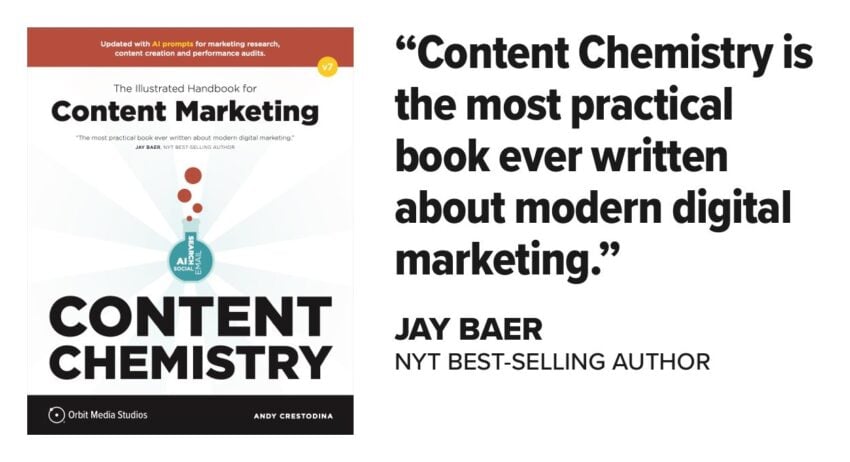
The best content from this blog are available all in one place – our book. Now on its 7th edition.
Content Chemistry, The Illustrated Handbook for Content Marketing, is packed with practical tips, real-world examples, and expert insights. A must-read for anyone looking to build a content strategy that drives real business impact. Check out the reviews on Amazon.
The post How to Generate Leads: The Complete (35-step) Lead Gen Process [Infographic] appeared first on Orbit Media Studios.